
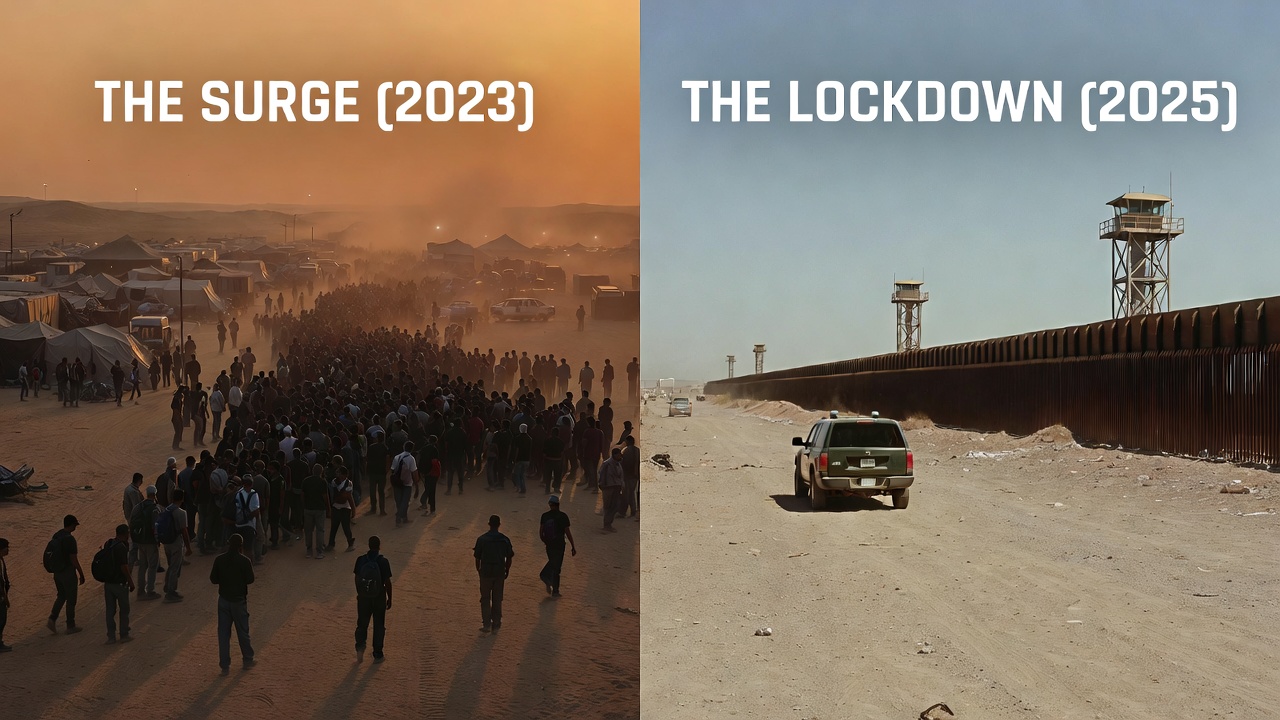
The Biden Era Analysis
The question of whether the Biden-Harris Administration (2021–2024) deliberately allowed a massive influx of illegal immigrants to overwhelm the U.S. border system remains a central pillar of political debate. Critics point to the Cloward-Piven Strategy—a 1960s radical theory aimed at overloading public welfare systems to precipitate a crisis and force a socialist “guaranteed income”—as the blueprint for what occurred.
Analysis suggests the administration’s policies were not merely mismanagement, but a strategic maneuver involving census counts, NGO pipelines, and the intentional use of the asylum loophole.
The Strategy: Overload to Collapse
Proposed by sociologists Richard Cloward and Frances Fox Piven, the strategy advocated for enrolling as many people as possible in welfare programs to strain the bureaucracy to the point of collapse. While originally focused on welfare, the core tactic of induced chaos bears a striking resemblance to the border during the Biden era.
- The Volume: Between Fiscal Year 2021 and 2024, U.S. Customs and Border Protection (CBP) recorded over 10.8 million nationwide encounters, with 8.7 million at the Southwest border alone.
- The Breaking Point: At its peak in December 2023, encounters hit a record 302,000 in a single month. This volume created an operational nightmare: detention facilities overflowed, processing backlogs stretched for years, and repatriation became nearly impossible as officials prioritized “catch and release.”
Political Calculus: The Census and Apportionment
The primary incentive for this influx was not humanitarian, but political. Because the U.S. Census counts all residents—including undocumented immigrants—for congressional apportionment, population surges in blue states like California, New York, and Illinois directly influence the number of House seats and Electoral College votes.
By 2024, estimates showed that undocumented populations influenced the allocation of up to three additional House seats, diluting the voting power of citizens in states where border enforcement was favored. This essentially allowed the administration to “import” political power for the 2030 census.
The NGO Pipeline and Un-Vetted Risk
Non-governmental organizations (NGOs) served as the logistics arm of this strategy. Groups like Catholic Charities and HIAS received billions in federal grants to provide shelter, travel vouchers, and legal coaching. In FY 2024 alone, DHS allocated over $380 million to NGOs specifically for migrant support.
Furthermore, the surge allowed roughly 2 million “got-aways” to enter the U.S. undetected since 2021.

With the system intentionally overloaded, vetting became cursory at best, creating a massive national security blind spot that critics argue was a calculated risk taken to achieve the ultimate goal: a permanent shift in the American demographic and political landscape.